
Firstly, can I study abroad for free?
You know what study abroad is, and have read all about its great benefits. When reading up on how to get started there’s a big question mark over the cost, and you’d like to know more.
The reality is that study abroad certainly isn’t free, but this doesn’t mean it’s out of your reach. Most study abroad programs compare favorably to the cost of studying at a US private university for the same amount of time.
And a study abroad semester is often what jumps out to employers at the end of your studies, so the benefits are there.
This article takes a look at the question of how much does it typically cost. We look mostly at major cities around the world and focus on what it would cost for a US-style study abroad semester. We assume participants would be looking for university credits for their semester abroad.

Study abroad need not be expensive when compared to a US private university
Cal State Fullerton group, ready to see Havana in a restored classic taxi
Why are some programs more expensive than others?
Just like any kind of product or service, there can be a wide range of prices. Some of the price is driven by the cost of living in cities, where housing is expensive, most study abroad programs are going to be costly.
Other factors include the organization that runs a program. If it is run by a study abroad provider – like Spanish Studies Abroad – the cost to the student will be a reflection of the income needed to run that program. However, a private, American university that creates an overseas program may simply decide to charge rates that are similar to those at its home campus and these may be expensive.
When comparing programs, we recommend that you look closely at what is included. Some programs may be a higher cost because their package might include more meals or more excursions.
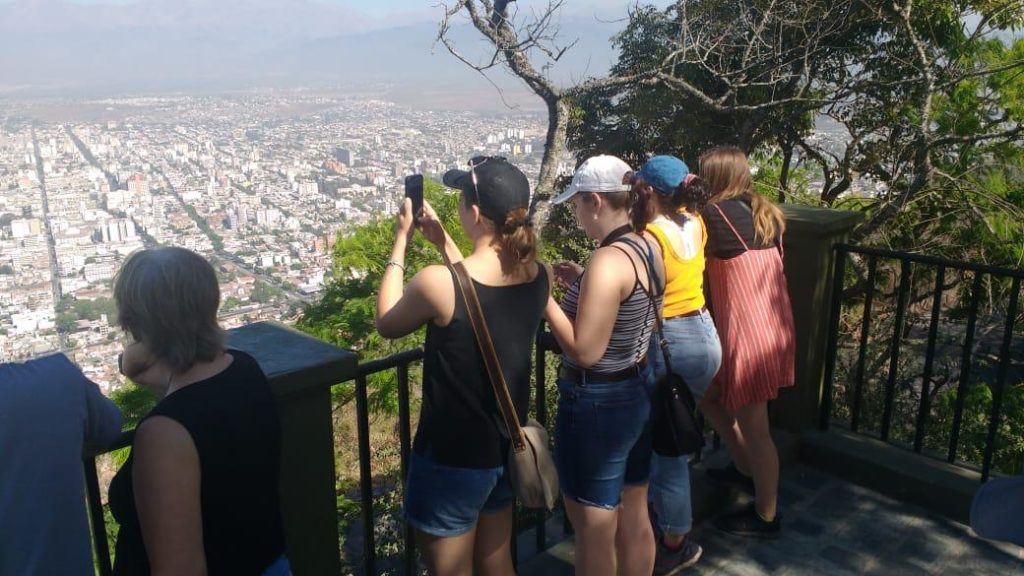
Spanish Studies Abroad student from Córdoba, Argentina look down on the city of Salta during their semester trip.
Estimating costs: what costs to consider when studying abroad?
For students who are considering studying abroad for a semester, the information can be dizzying. This article will provide a broad summary based on programs’ costs so that you can have a basic understanding of how much money may be involved.
This article is directed at North American students who wish to do a Fall or Spring semester in a major city overseas. It assumes that students need college credits for their time.
Remember that there are many variables for students. The focus of this article is in the major city in a country, usually the capital. These places are more expensive than smaller, provincial cities, just as New York is more expensive than Charlotte, North Carolina. If saving money is important to you, then look at shorter programs or life in a 2nd or 3rd-tier city, where housing is more affordable.
What types of expenses are included in our estimates?
Keep in mind that each program can vary and some of us spend more than others but the estimates for a semester program in this article include “everything” except your international transportation and any additional travel that you might choose to do.
They include program fees which often include your tuition, room and board, health insurance, academic excursions and any other program fees. We also estimate what might be typical spending money needed and local public transportation.
What expenses are included in our estimates?
Note: the following example breakdown is for a Spanish Study Abroad program, and may differ greatly from alternative program providers.
- Room & Board
- Tuition Fees & Books
- Study Tours
- Local Transportation
- Personal Spending Money
- Flights are not included
Flights can vary greatly depending how far in advance you book, your location, the time of year and the destination.
Study abroad costs for a semester major cities
To give you a frame of reference, we have researched various programs in cities that are well-known destinations for North American students. We provide a range of what is typical for the cost of the program.
This article discusses three important regions for study abroad, Western Europe (including the United Kingdom), Asia / Australia and two locations in Latin America.
Keep in mind that there can be a lot of differences between programs and what is included. So look carefully at what is included in a program’s price when you research. You want to avoid hidden costs.
At Spanish Studies Abroad, we use a model of including almost everything you will need, including meals and excursions. We feel it gives students the best idea of what to expect.
Study Abroad Costs for Major Cities
London, United KingdomEstimated Cost: $20,000-$25,000
London is an expensive city, for housing, salaries and meals and these are all factors. A variety of US institutions and private providers offer semester programs here, so do your research.
Madrid, Spain
Estimated cost: $16,000-$19,000
Madrid’s popularity with US students is attributable to the Spanish lifestyle and the importance of its language. Most programs are less expensive than other European capitals and the range to consider is wide.
How much does it cost to study in Spain?

Berlin, Germany
Estimated cost: $16,000-$18,000
Berlin may not have the glamour of Paris and Rome but this fascinating city offers many interesting programs. And many of these are at a lower cost than other Western European options.

Seoul, South Korea
Estimated cost: $14,000-$16,000
This bustling metropolis is not inexpensive but generally is more affordable than Western Europe. Most programs here combine classes in the Korean with elective classes taught in English.
Córdoba, Argentina
Estimated cost: $16,000-$18,000
Córdoba, Argentina’s second largest city, provides an excellent immersion environment for students looking to perfect their Spanish. Food is inexpensive and the city is an excellent gateway to outdoor activities to the north and south.
Kuala Lumpur, Malaysia
Estimated cost: $9,000-$10,000
Malaysia’s rapid development has converted it into a melting pot of diverse cultures and influences. Malaysia offers variety too – from diverse cities to pristine beaches; you will undoubtedly have a unique experience.
Paris, France
Estimated cost: $18,000-$21,000
Paris has long been a destination for American students studying French, Art and Design. As a Western European capital, the cost of living is high here. There are many US university programs in France to suit different interests and budgets.
Rome, Italy
Estimated cost: $18,000-$30,000
We found a wider range of prices in Rome, a city where students often study History or Art. They can range from reasonable to very expensive.
Hong Kong
Estimated cost: $25,000-$35,000
Housing is at a premium which has been a factor in the cost. Due to recent political unrest however, many universities have suspended their study abroad offerings in Hong Kong. Do your research and check with your home university.
Sydney, Australia
Estimated cost: $17,000-$22,000
Sydney attracts students from North America because there is no language barrier. Therefore programs are wide-ranging, from STEM subjects to Law. Many US universities have agreements schools Down Under, which can greatly affect cost.
San Juan, Puerto Rico
Estimated cost: $12,000-$13,000
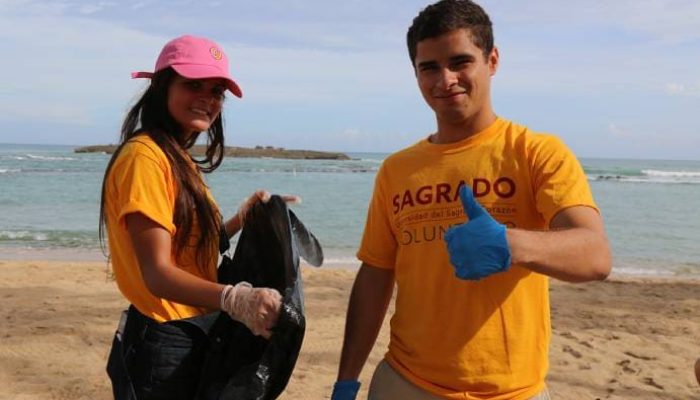
Spanish Study Abroad’s program in the Caribbean city of San Juan partners with the island’s oldest private university, la Universidad del Sagrado Corazón. US citizens do not require a passport to travel to Puerto Rico and flights are reasonable.
How to raise money for study abroad
So now that you have a rough idea of what you may need for different parts of the world, consider your priorities and budget. Here is a handy checklist to see what you can what funds might be available:
Apply for scholarships
Speak to your university about all of the options you have available. Parts of your financial aid package can be used in most cases. Some of the following options could also apply to your situation:
There are five types of study abroad scholarships
- Diversity
- Spanish Heritage Speaker
- Pell Grant
Government-funded scholarships
Take some time to look into government-funded scholarships. Most students are completely unaware of the wide-range of financial aid available.
Examples
- Fulbright US Student Program
- Benjamin A. Gilman International Scholarship Program
- Critical Language Scholarships for Intensive Summer Institutes
- Boren Awards for International Study
Funding from private organizations
There are also a large number of private organizations which provide scholarships to study abroad students. Here are some examples, but Google that stuff! It’s important, and I’m sure you can find some which are specific to your local area, or which have ties with your school.
Examples
Scholarships from Foreign Governments
Once you know where you’d like to study, start checking out national scholarships provided by the local government. Here are some examples:
Examples
- German Academic Exchange Service (DAAD)
- Chinese Government Scholarship Program
- French Embassy Benjamin Franklin Travel Grant
- US-Japan Bridging Foundation
Set up a fundraising campaign
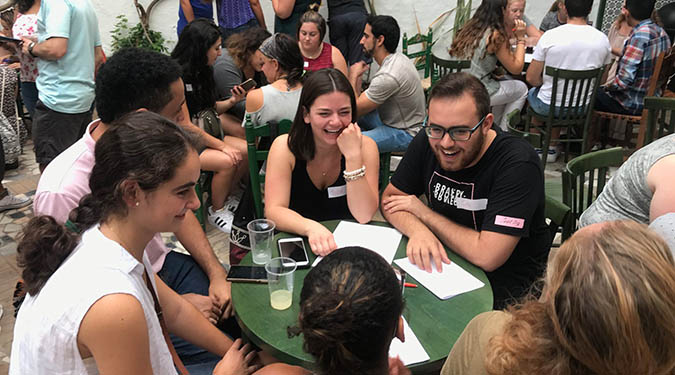
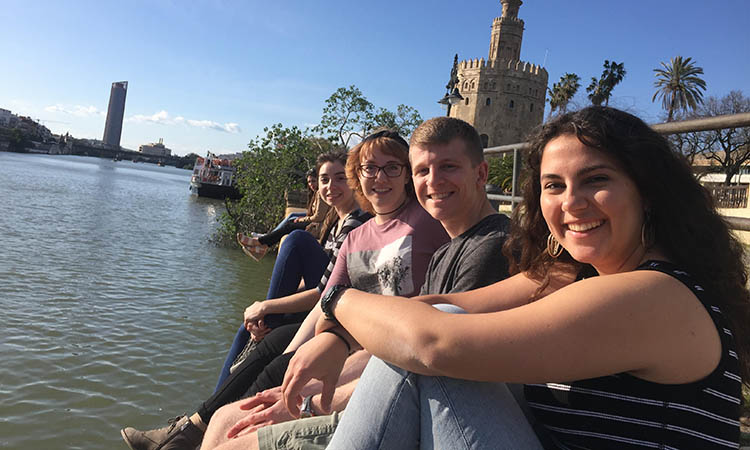
American students in Seville host their Spanish conversation partners.
Over the past few years, it has become more and more common for students to set up online fundraising campaigns as a way to manage and share their project. Don’t be afraid to give it a go; it may well serve to concrete in your mind the reasons why you’d like to study abroad. It will also give you an easy platform through which to ask for donations and support.
gofundme.com has become an important fundraiser tool, so people are used to this type of request.
Ask friends and family. Politely, of course!
Relatives who have studied abroad will immediately understand the impact it can have. And others probably would rather help to fund an experience than buying something. It can’t hurt to ask – be prepared with the details of what you’re considering.
Ask your local house of worship. Even more politely!
This possibility can vary greatly from person to person but some organizations may allow you to list your gofundme.com campaign in their bulletins or on a bulletin board. If you’re really active in your church, there may be an occasion to address the members to tell you their plans.
Get a part-time job
If you want the experience, you may have to work for it. You’ll be happy to have some extra spending money in your pocket even if you trade some evenings and weekends.
While Peace Corps is a two-year commitment, it’s a rewarding experience that is sure to open doors to future career opportunities. Volunteers are placed all over the world in service projects in a variety of sectors.
These include agriculture, environment, community economic development, health, education and youth in development. One former volunteer describes the Peace Corps as “the most important transformational moment in my life.”
Raising Money…
- Apply for scholarships
- Set up a fundraising campaign
- Ask friends & family
- Ask your local house of worship
- Get a part-time job
Tips for minimizing study abroad costs
Remember that you have control over many aspects of your overall expenses.
Consider a smaller city
Seville is cheaper than Madrid, for example. Smaller cities often are cheaper so consider whether being in a “famous” city matters to you.
Book airfare early
Generally, airlines raise prices for a flight as more people reserve their tickets.
Live like a local
It seems obvious, but avoid tourist traps, eat at home instead of restaurants, walk or use public transport, and spend weekends with local friends instead of traveling for big savings.
Balance nights out against weekend trips away
If you spend every weekend away from your study abroad city, catching up with other friends, you may not get the most out of your host culture. Maybe a few weekend trips and the rest can be spent in your new host city, enjoying the local culture and friends.
Don’t use credit cards
Credit cards charge a fee for currency exchange and, if you don’t pay off the entire balance each month, you have interest fees. It’s also easy to spend too much when using a credit card; you “feel” the loss of cash more.
Get a student ID for discounts
Don’t forget you’re a student! Find out if your university I.D. card qualifies you for any discounts in your city. Also, the ISIC card is a global student which offers discounts. Check out whether they are active in your destination country and, if so, get an ISIC card before you depart
Is study abroad really worth it?
There are so many reasons to study abroad – memorable experiences, greater marketability and enhanced language skills can all be takeaways from a semester abroad. If you can integrate it with your university studies, you should not have to delay graduation.
We often do not have the chance to see the world – or much of it – after our career has begun. Consider your situation and meet with your university’s international education office. It is worth it for so many of us.

Spring semester in Seville means immersing yourself into the fun and pageantry of Feria.
SSA Education Abroad
Summary
Like all programs and services, there are differences in offerings and prices. We hope that this article helps you begin to consider whether and where to study abroad.
Thinking ahead by a year and a half can help you select a program that works for your interests and budget. It can give you time to find funding sources such as scholarships.
Where do you dream of living and studying? Take the time to find out if that dream can come true for you.