

Two Distinct Academic Models with One Shared Goal: Educating Global Citizens
Summer study abroad programs play a critical role in helping students develop global competencies that extend beyond disciplinary knowledge. For faculty and study abroad professionals, the challenge is not only selecting international programs but aligning program design with clear learning outcomes, institutional goals, and student needs.
The two summer programs outlined below, Camino de Santiago and Panamá Health Practices, illustrate how distinct program models can intentionally support global learning through different pedagogical frameworks.
Keywords naturally supported: global competencies, summer study abroad programs, experiential learning, faculty-led programs
Program Model 1: Camino de Santiago
Personal Growth, Identity, and Reflective Learning

Program Overview
The Camino de Santiago summer program represents a high-impact experiential learning model. Rather than centering learning in classrooms or institutional settings, the program is designed around movement, shared experience, and continuous academic reflection.
From a curricular perspective, learning occurs through structured reflection, guided discussion, and contextual engagement. Each stage of the journey functions as an active learning environment where students integrate history, culture, spirituality, and lived experience.
This model aligns closely with widely recognized global learning outcomes, including intercultural competence, self-awareness, and ethical reasoning.
Intercultural Awareness and Global Openness
The Camino serves as a natural intercultural learning environment. Daily interaction with pilgrims from multiple countries exposes students to diverse cultural norms, languages, and perspectives in a non-mediated context.
From a faculty standpoint, intercultural learning is supported by:
- Pre-departure cultural framing
- On-site reflection prompts
- Facilitated group discussions connecting experience to theory
These elements help students move from observation to critical cultural understanding, a core component of global competency development.
Autonomy, Resilience, and Adaptability
Because the Camino is not a highly scripted experience, students must navigate daily decisions related to pacing, logistics, and group dynamics.
This environment supports the development of:
- Adaptability in changing conditions
- Resilience through sustained physical and cognitive effort
- Problem-solving skills in unfamiliar contexts
For faculty, this program model demonstrates how intentional challenge can be used as a pedagogical tool when paired with appropriate academic scaffolding.
Reflective Thinking and Personal Identity Development
Reflection is a central academic component of the Camino program. Through journaling, guided prompts, and facilitated discussions, students critically examine questions of identity, belonging, and purpose.
This reflective structure allows faculty to:
- Link experience to academic theory
- Assess learning through reflective artifacts
- Support deeper integrative learning outcomes
Rather than focusing solely on content acquisition, the program emphasizes transformative learning, a recognized best practice in global education.

Collaborative Work and Shared Leadership
Group progress along the Camino depends on mutual support. Students must learn to navigate differences in physical ability, communication styles, and personal needs.
This structure naturally develops:
- Shared leadership
- Accountability to the group
- Interpersonal communication skills
These competencies are directly transferable to academic, professional, and civic contexts
Academic Fit and Student Profile
The Camino de Santiago program is particularly appropriate for:
- Humanities and cultural studies
- Education and leadership programs
- Courses focused on identity, ethics, or reflective practice
For institutions, this model demonstrates how non-traditional learning environments can still meet rigorous academic standards when intentionally designed.
Program Model 2: Panamá Health Practices
Professional Competencies and Systemic Analysis in Global Health

Program Overview
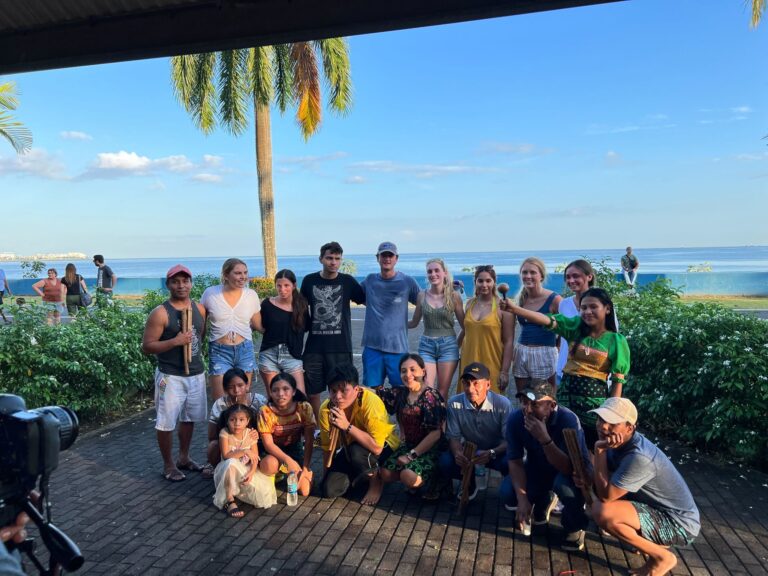
Panamá Health Practices follows a professionally oriented, applied learning model, making it well-suited for students in public health, health sciences, health policy, and related disciplines.
Learning occurs within real healthcare contexts, allowing students to observe, analyze, and discuss health systems while engaging with local professionals and communities.
This program aligns with global health education priorities, including systems thinking, ethical practice, and intercultural communication.
Keywords naturally supported: global health education, applied learning, health systems
Intercultural Competence in Healthcare Settings
Students examine how healthcare practices are shaped by:
- Cultural norms
- Socioeconomic conditions
- Historical and political contexts
Faculty can support this learning through:
- Comparative assignments
- Guided observation frameworks
- Structured reflection connecting local practice to global health theory
This approach helps students develop cultural humility, a foundational competency in healthcare professions.
Critical Thinking and Comparative Analysis
The program emphasizes analytical skill development through comparison of:
- Healthcare delivery models
- Social determinants of health
- Resource allocation and access
Students learn to assess systems critically rather than assuming one universal model of care, an essential skill for future global health professionals.
Professional Ethics and Global Responsibility

Exposure to diverse healthcare environments encourages ethical reflection related to:
- Equity and access
- Resource limitations
- Professional responsibility in international contexts
Rather than offering prescriptive conclusions, the program guides students through ethical inquiry, supporting responsible and informed engagement with global health challenges.
Professional Intercultural Communication
Meaningful engagement with local professionals and organizations requires students to practice clear, respectful, and culturally informed communication.
These experiences reinforce professional standards while highlighting the importance of context-sensitive interaction in healthcare and public service fields.
Academic and Career Alignment
Panamá Health Practices is designed to support:
- Pre-professional academic pathways
- Graduate school preparation
- Career exploration in health-related fields
The program demonstrates how short-term summer study abroad can still deliver substantial professional learning when outcomes are clearly defined.
Comparative Learning Outcomes: Two Approaches, Complementary Competencies
While both programs are offered during the summer and involve immersive international experiences, their pedagogical designs intentionally differ.
Key Differences in Learning Design and Outcomes
| Camino de Santiago | Panamá Health Practices |
| Reflective, experiential learning | Applied, professional learning |
| Focus on identity and personal growth | Focus on systems, ethics, and practice |
| Informal, community-based context | Institutional and healthcare-based context |
| Emphasis on personal transformation | Emphasis on professional preparation |
For study abroad offices and faculty, this comparison highlights how program diversity strengthens an institution’s global portfolio.

Conclusion: Multiple Pathways to Global Competency Development
There is no single model for developing global competencies. Instead, effective international education relies on intentional program design, alignment with learning outcomes, and clarity of purpose.
The Camino de Santiago and Panamá Health Practices programs illustrate how different academic approaches, one reflective and identity-based, the other applied and professional, can both deliver high-impact global learning.
Two different programs.
One shared commitment to rigorous, responsible international education.